
100 Days of Deception | The Ep. 3 Train Ticket… 3 Weeks Later, "That Day" Hits Shanghai
⚠️ Spoilers for episodes 1–6 of 100 Days of Deception. Interpretations and predictions are flagged in the text as "my take" and "my pick".
In episode 4, someone admits she came from Shanghai to kill Sato. That's So-ran, the Gugukdan's sniper. But in the very same episode, Shanghai comes out of Sato's mouth too. Facing a senior police officer, he brings up a plot to assassinate the Governor-General — a plot ordered, he says, by the "Shanghai gajeongbu."
Gajeongbu. To a Korean ear, that first sounds like the everyday word for a housekeeper. Sato even has one at home, Yanagi. But the gajeongbu Sato is talking about isn't a person at all.
Over six episodes, the dialogue of this drama has been quietly dropping names from real history. Kim Gu, Lee Bong-chang, Lee Deok-ju, and Nam Ja-hyeon.
So here's today's question. What exactly is the Shanghai gajeongbu Sato mentions? And around that time, what was going on in Shanghai?
One hint. Going by the drama's calendar, exactly three weeks after episode 3, something happens in Shanghai that Korean history has never forgotten. Whether the drama will get that far, we'll weigh up at the end. We'll piece it together one line of dialogue at a time, and at the end I'll lay down some new Gordon Insight picks.
The drama's clock
First, let's pin down exactly when this story takes place. In episode 3, look at the job-interview letter that has ended up in Ga-kyung's hands: the date is Saturday, April 9, at 1 p.m. The interview could send her to study in America, so Ga-kyung hurriedly checks what day it is. Today is April 8. The interview is tomorrow.
In the 1930s, April 9 fell on a Saturday in only two years: 1932 and 1938.
But the train ticket Ga-kyung is holding has the answer printed right on it. Shōwa 7 — April 8, 1932.
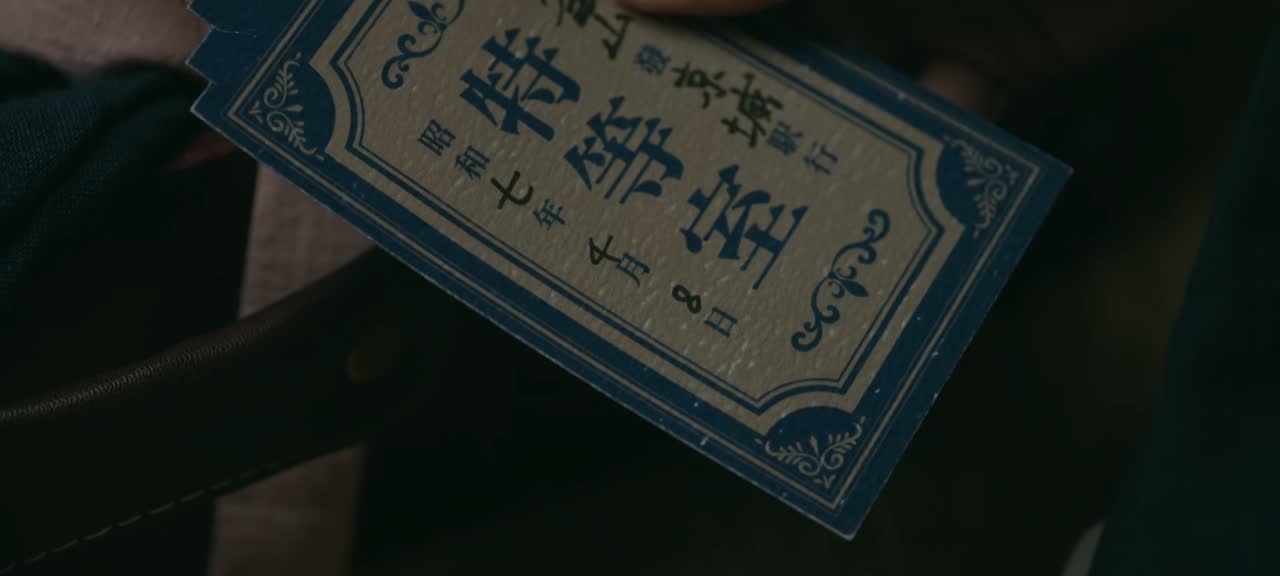
© tvN “100 Days of Deception”
And episode 4 has a line that nails it down a second time. The name Sato drops in front of the police officer is Kim Gu. It was on Kim Gu's orders, he says, that "Lee Bong-chang attempted to assassinate His Majesty the Emperor in Tokyo. That bombing attempt happened only three months ago."
Lee Bong-chang's attack took place on January 8, 1932. Three months after that is April. It lines up perfectly with the letter in episode 3.
This drama's clock is set to April 1932. And for Korea, that April was a truly heavy month.
What "gajeongbu" really means
Let's go back to Sato's words in episode 4. After Lee Bong-chang, the next case he brings up is the "subversive group" caught in Hwanghae Province. And what they were supposedly acting on is the phrase from the top of this post: the Shanghai gajeongbu's orders.
Look at the lower left of the screen in this scene. The drama itself has added a note.
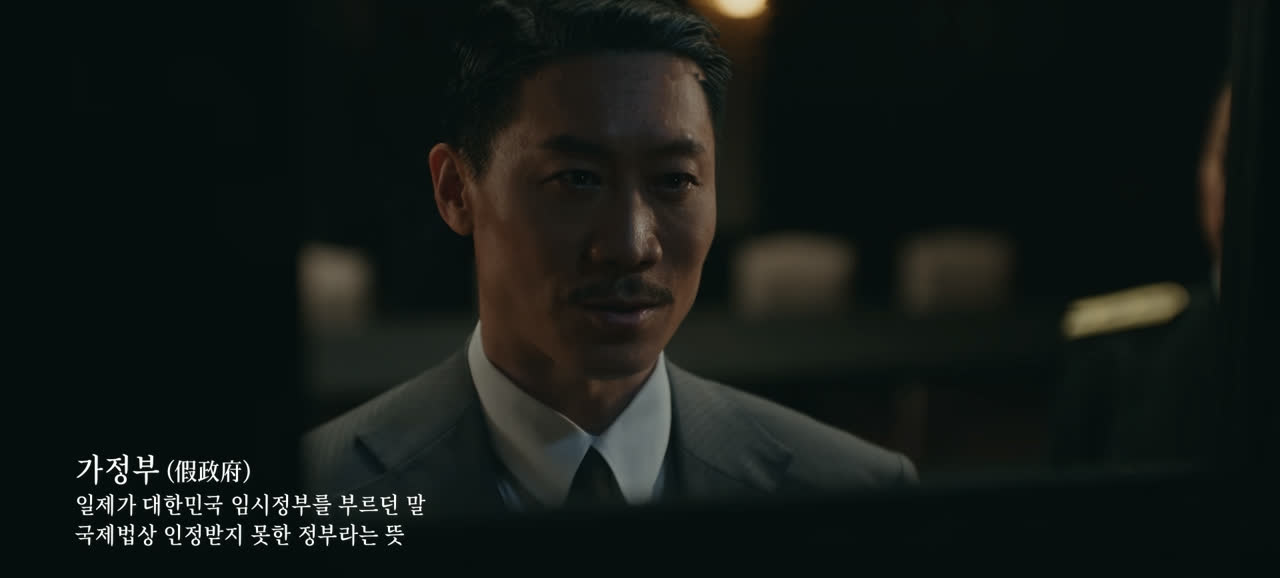
© tvN “100 Days of Deception”
The ga in gajeongbu isn't the ga (家) of "household," as in housekeeper. It's the ga (假) that means "false" or "provisional." Gajeongbu, written 假政府, means a "provisional (false) government," a government not recognized under international law. That's what imperial Japan called the Korean Provisional Government in Shanghai. The drama simply put the language of the era straight into Sato's mouth. (Netflix's English subtitles render the word as "the self-proclaimed government in Shanghai.")
And the term really does turn up in the newspapers of the day. In the Provisional Government records compiled by the National Institute of Korean History, the Maeil Sinbo, the Government-General's own paper, was already writing "Shanghai gajeongbu" in 1919. Headlines in the Dong-A Ilbo and the Chosun Ilbo carry phrases like "Shanghai gajeongbu member" and "Shanghai gajeongbu war funds."
So, unpacked, Sato's line means this: the men caught in Hwanghae were sent by the Provisional Government in Shanghai.
But there's one more thing hidden in that line. The case Sato mentions actually happened. I'll come back to it a little later.
People from Shanghai
The drama's Gugukdan came from Shanghai too. In episode 3, when the police raid an inn, this is what Hideo wants to confirm: "By the Gugukdan, do you mean the organization based in Shanghai?" And when Ga-kyung relays the question to the people at the inn, it's the same thing: did they hide an independence group called the Gugukdan here?
An independence group based in Shanghai. In episode 2, we even get a name. According to the police report, it's Han Cheol-yong, a key Gugukdan agent. He's the man behind the attempt on the life of the head of Jongno Police Station twelve years earlier, and when he got out of prison two years ago, where he went was Shanghai.
So-ran is no different. In episode 2, the story she tells about herself includes the moment she first heard there was something called the Gugukdan in Shanghai.
Episode 2 even says the gajeongbu's real name out loud. Listen to Philip: the Provisional Government must know they're out to kill Sato, so whoever it was can't be one of its people either. The Provisional Government — the very thing Sato called the gajeongbu. In other words, the Gugukdan's plans reach all the way to Shanghai.
Then, in episode 3, the Gugukdan members argue over whether to send Ga-kyung in as a mole. What kind of job is that? "A spy holds not only our lives but the fate of the Shanghai headquarters in their hands."
The Shanghai headquarters. Behind the Gugukdan in Gyeongseong stands Shanghai. So who was actually in Shanghai in 1932?
The real secret group in Shanghai
In 1932, Shanghai was home to the Korean Provisional Government. Founded in 1919, it had been holding on for thirteen years by then. But around that time it was short of money for the independence movement, with troubles piling up inside and out. The video the Ministry of Patriots and Veterans Affairs made about this very drama describes those years the same way.
That was when Kim Gu played his card: the Korean Patriotic Organization, a group he had set up in secret in 1931. It had a single goal: to go after the leaders of imperial Japan at the very heart of its power. Its members swore an oath in front of the Korean flag and set out.
A headquarters in Shanghai, agents sent in to target the Governor-General and the emperor. Sound familiar? To me, the drama's Gugukdan looks like the spitting image of the Korean Patriotic Organization.
And the cases Sato brought up were this organization's very own operations. At the end of that string of operations lies that day, three weeks after episode 3.
Three months earlier, Tokyo
The first one: January 8, 1932, Tokyo. Lee Bong-chang, a member of the Korean Patriotic Organization, threw a bomb at the emperor's procession. It happened in the middle of Tokyo, right in front of the Metropolitan Police headquarters.
And Lee Bong-chang had something in common with Hideo. He was reportedly a young Korean who lived in Japan under a Japanese name, just like a Japanese man. Yet he went to Kim Gu in Shanghai and volunteered to go after the emperor. A Korean who had lived as a Japanese finally chose who he really was.
The bomb never reached the emperor, but Japan was thrown into an uproar. Newspapers rushed out extra editions. Chinese papers splashed the news across their pages too.
The drama's Governor-General can't forget it either. In episode 5, back in Gyeongseong, he grumbles: "With scoundrels like Lee Bong-chang and Lee Deok-ju around…" The most powerful man in Joseon, reduced to hiding his itinerary and sneaking around.
But what about the name next to Lee Bong-chang, Lee Deok-ju? Who was he? He's the man from Hwanghae that Sato was talking about.
Caught in Hwanghae
In the spring of 1932, Kim Gu sent two men into Korea: Lee Deok-ju and Yu Jin-sik. Their target was Governor-General Ugaki. While they were preparing the attack, the two were caught in Sincheon, in Hwanghae Province. The Encyclopedia of Korean Culture also records that they were arrested in Hwanghae. That summer, both were sentenced to seven years in prison.
Now think back to Sato's line in episode 4. A "subversive group" caught in Hwanghae, orders from the Shanghai gajeongbu, a plot against the Governor-General. The place, the target, the backer — everything matches. The drama slipped a real case into Sato's mouth without making a fuss about it.
In episode 5, the Governor-General says the same thing, in front of a room full of senior officials. Men acting on Kim Gu's orders, he complains, are sneaking into Joseon to kill him. In episode 4 it was the Shanghai gajeongbu's orders; in episode 5, Kim Gu's orders. The power Sato called the gajeongbu, the Governor-General calls Kim Gu. And in real life, the man who sent Lee Deok-ju and Yu Jin-sik in was indeed Kim Gu.
So what about the drama's Gugukdan? In episode 5, in the room where a wounded comrade is hidden, word goes around that the Gugukdan went after Sato in Dongsung-dong that evening and apparently failed. And the price: several Gugukdan members are dead.
The real Korean Patriotic Organization paid the same way. Lee Bong-chang never came back, and Lee Deok-ju got seven years. Once you set out, it was a road you rarely came back from.
And after a failure comes, as always, the crackdown. Sato's order: wipe out the Gugukdan for good, roots and all.
Tell the world
Back to that scene in episode 4. Sato also runs the Gugukdan down like this: even the Western press, he says, calls them "terrorists."
What the world calls them matters a great deal to other people in this drama too. In episode 2, Philip and So-ran clash over a promise made in Shanghai. What was that promise? In So-ran's words: "Tell the world how Japan stole Joseon's sovereignty and committed atrocities." And their own part? "We'll handle the guns and bombs."
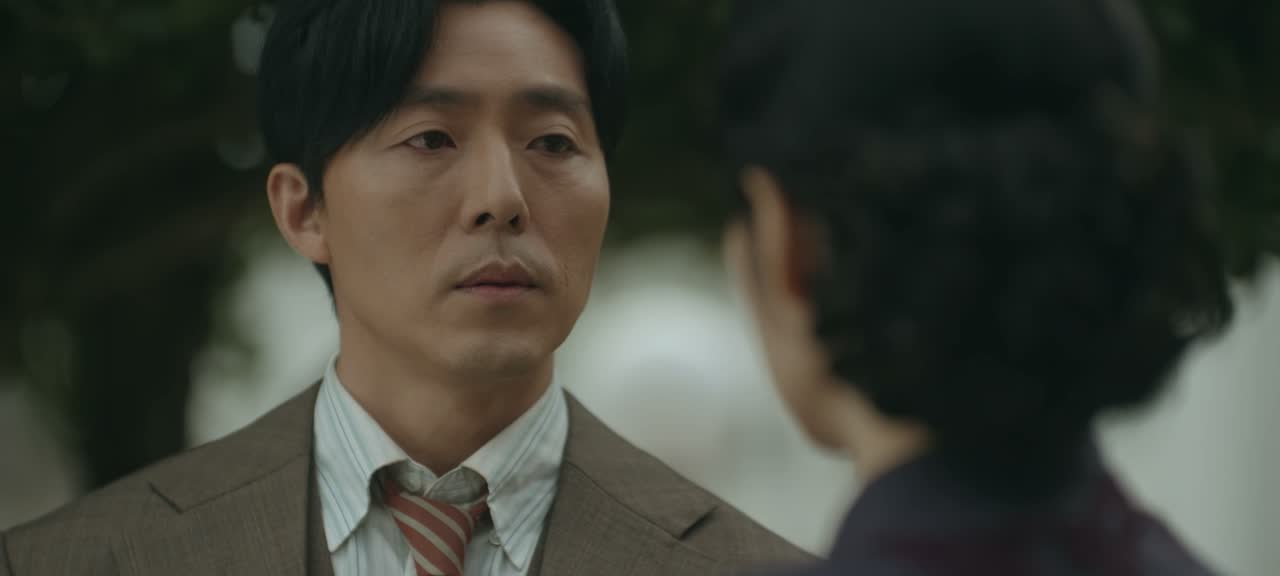
© tvN “100 Days of Deception”
That's why, in episode 4, the secret So-ran confesses about her marriage is that she deliberately approached an American who knew nothing and married him. The guns for the Gugukdan, the pen for Philip, the American reporter. So-ran's marriage was about that pen from the very start.
And in 1932, the eyes of the world really were turned this way. In episode 3, Philip brings it up with Hideo: isn't a League of Nations commission coming to Gyeongseong soon? Why the commission came all the way to East Asia comes up in the same conversation: the Manchurian Incident, the Shanghai Incident.
The Manchurian Incident of 1931, and the Shanghai Incident of January 1932. The League of Nations sent the commission to find out what had really happened in Manchuria. And there was a Korean woman who cut off her own finger to write that commission a letter.
The female sniper
Before we get to her, take this line from episode 6. Na Byeong-sun brings Keum Seok-jung news of the Gugukdan: it looks like they set the whole thing up to kill Sato. He means the shooting at Philip's house.
And Byeong-sun has learned one more thing: the Gugukdan really does have a female sniper. The name her skill is measured against is this one: "They say she's as good as Nam Ja-hyeon."
Nam Ja-hyeon was a real person. In 1932, when the League of Nations commission came to Harbin, she cut off a finger and wrote in blood "韓國獨立願," "I wish for Korea's independence." The following year, the story goes, she set out to kill the Japanese ambassador disguised as an old beggar woman, with a bomb hidden on her, and was caught. She later died a martyr.
The drama's female Gugukdan sniper is, of course, So-ran. A sniper spoken of in the same breath as Nam Ja-hyeon. It makes her line about coming from Shanghai sound that much heavier.
Before the commission arrives
Now back to the League of Nations commission. At that episode 5 meeting we saw earlier, the first thing the Governor-General tells his officials is that the League of Nations commission will soon be in Gyeongseong. The very commission Philip brought up in episode 3.
The Governor-General is clear about what's riding on the visit, too. If the League of Nations is to recognize Manchukuo as legitimate, the commission has to see Manchuria and Korea developing in peace.
But the Governor-General had headaches in Manchuria as well. Names like Ji Cheong-cheon and Yang Se-bong come out of his mouth. The drama puts on-screen notes on these two names, too. Ji Cheong-cheon, commander-in-chief of the Korean Independence Army; Yang Se-bong, commander-in-chief of the Korean Revolutionary Army. Both were real independence army commanders fighting the Japanese army in Manchuria in 1932.
After Lee Bong-chang, Lee Deok-ju and Nam Ja-hyeon, yet more real people. So the Governor-General's conclusion: the Government-General will make keeping order in Gyeongseong its top priority. And the separate order he gives the Inspector General — Sato himself — is to take great care in managing the foreign correspondents stationed in Gyeongseong.
A foreign correspondent in Gyeongseong. In the drama, that's Philip, the American reporter. That's why Sato fusses over Philip so much. In episode 2, too, the Governor-General drove the point home to Sato over the phone: that American reporter must not detect even a hint of unrest in Joseon.
Philip knows what card he's holding, too. Here's what he points out in episode 6: with the whole world watching Japan over Manchukuo, what if Sato thinks Philip might publish the Kyeam-ri story? Then what? So-ran's answer: with Manchukuo at stake, if the foreign press picks it up, Sato might have to step down as Inspector General.
A single line in the foreign press could shake the position of the Government-General's number two. Episode 6 has this line as well: back then, too, a foreign reporter got word out to the foreign press, and it ended up in court. The Kyeam-ri incident — the one the drama places in Taishō 8 (1919) — went to trial because of one foreign reporter's article.
So the pen So-ran entrusted to Philip was every bit as frightening a weapon as a gun.
April 29, Shanghai
Now let's go back to the drama's clock. Episode 3 is April 8. So at the end of that April, what happened in Shanghai?
April 29, 1932, Hongkou Park, Shanghai. A ceremony was held to celebrate both the emperor's birthday and Japan's victory in the Shanghai Incident.
A young man was there that day: Yun Bong-gil. He had been living in Shanghai as a vegetable seller, keeping an eye on the Japanese army's movements. On April 26, days before the attack, he joined the Korean Patriotic Organization and took its oath — a vow to strike down the officers of the enemy that had invaded his country, for the sake of its independence.
Kim Gu handed him two bombs. One was shaped like a water flask, the other like a lunch box.
Real film of that day survives. On the platform stood the Japanese top brass, among them Shirakawa, commander of the Shanghai Expeditionary Army. That morning, it's said, Yun Bong-gil swapped watches with Kim Gu. My watch only has an hour of use left in it, he told him, so let's trade it for yours.
Then, toward that platform, Yun Bong-gil throws the water-flask bomb.
Shirakawa was badly wounded and died about a month later, and Kawabata, head of the Japanese Residents' Association, was killed too. Minister Shigemitsu and several other dignitaries were seriously injured.
Most people remember it as the "lunch-box bomb," right? That lunch-box bomb, it's said, was the one he kept back so he could take his own life after the attack. But that attempt failed, and he was seized on the spot. That December, he was executed by firing squad in Japan, dying a martyr.
Minister Shigemitsu, badly wounded on the platform that day, lost a leg. And thirteen years later, in 1945, the man who climbed aboard the USS Missouri leaning on a cane and signed Japan's instrument of surrender was that same Shigemitsu.
Afterward, Kim Gu reportedly told the world, through the foreign press, that this had been an operation of the Korean Patriotic Organization. Exactly what So-ran asked of Philip: telling the world.
And it moved China. Chiang Kai-shek himself reportedly praised it to the skies. The China here isn't today's Communist government. It's Chiang Kai-shek's Nationalist government, the Republic of China — the same government that later moved to Taiwan. The Chinese began to see the Korean independence movement in a new light, and that government started actively supporting the Provisional Government. That support, it's said, carried all the way to the founding of the Korean Liberation Army in 1940.
Japan's response was fierce. Koreans in Shanghai were rounded up one after another, and a large bounty was reportedly put on Kim Gu's head. In the end, the Provisional Government had to leave Shanghai, its home for so many years.
The very April when the drama's Government-General is clamping down so hard on security. At the end of that month, this is what happened.
April 8 on the episode 3 train ticket, and exactly three weeks later, April 29. To me, the drama's clock looks like it's ticking toward that day.
Today's answer
So, back to the question we started with. The Shanghai gajeongbu Sato spoke of was no housekeeper. It was the name imperial Japan used for the Korean Provisional Government in Shanghai.
Lee Bong-chang, Lee Deok-ju, Nam Ja-hyeon, Ji Cheong-cheon, Yang Se-bong: the names the drama has brought up. And one it hasn't yet, the man at the end of that month, Yun Bong-gil. Every one of them a real name from 1932.
That's why, to me, the Gugukdan looks like a shadow of the 1932 Korean Patriotic Organization. A headquarters in Shanghai, agents slipped into Gyeongseong, and the man they're after, the Government-General's number two: Sato.
Of course, that's my take. Nobody knows whether the drama will follow this history as it happened. But once you know this clock, every single line sounds different.
Gordon Insight picks
So before episode 7, here are my three new Gordon Insight picks.
Pick one: when the drama's clock reaches the end of April, news of Hongkou Park makes it to Gyeongseong, and that becomes the Gugukdan's signal to move.
Pick two: the League of Nations commission's visit to Gyeongseong becomes Philip's stage. The story So-ran asked him to write, the one that tells the world, comes out then. Philip being a reporter, the League of Nations commission, and Sato bringing up the Western press: my bet is that these three come together in a single play starting with episode 7.
Pick three: what Sato is really after isn't just the Gugukdan in Gyeongseong — it's the Shanghai headquarters. In episode 2, Sato says it doesn't matter whether it was really the Gugukdan; they'll just say the Gugukdan did it. The culprit didn't matter. What he needed was a pretext. And then he adds: "We'll use this chance to wipe them out." If he means to pull the Gugukdan up by the roots, those roots would be the Shanghai headquarters we heard about in episode 3.
What's your prediction? Will the drama really show us April 29? Once episode 7 airs, I'll score these picks right away.
Sources
Real history
- 가정부(假政府), "provisional (false) government" — the drama's on-screen note in episode 4 · 국사편찬위원회 한국사DB (National Institute of Korean History, Korean History Database), 「대한민국임시정부자료집」 (Korean Provisional Government records; headlines from the Maeil Sinbo, 1919, and the Dong-A Ilbo and Chosun Ilbo, 1920)
- The Korean Patriotic Organization (1931) and Lee Bong-chang's attack (January 8, 1932) — 한국민족문화대백과 (Encyclopedia of Korean Culture) · 국가보훈부 (Ministry of Patriots and Veterans Affairs), 「드라마 '100일의 거짓말' 1932년 실제 역사는?」 (October 14, 2026)
- Lee Deok-ju and Yu Jin-sik (1932, arrested in Hwanghae) — 국가보훈부 공훈전자사료관 (Ministry of Patriots and Veterans Affairs e-archive of independence activists) · 한국민족문화대백과 (Encyclopedia of Korean Culture)
- The Shanghai Incident (January 28 – May 5, 1932) — U.S. Department of State, FRUS (Foreign Relations of the United States)
- Yun Bong-gil's attack (April 29, 1932) — 한국민족문화대백과 (Encyclopedia of Korean Culture), 「윤봉길」 and 「훙커우공원 의거」 · KBS 히스토리 〈영상한국사〉 (KBS History, Visual Korean History) 180 and 182 (Chiang Kai-shek's praise: 179)
- The water-flask bomb, the lunch-box bomb kept for suicide, his execution in Japan that December — 한국민족문화대백과 (Encyclopedia of Korean Culture), 「윤봉길」 and 「훙커우공원 의거」 · KBS 〈영상한국사〉 180
- Chinese (Nationalist government of the Republic of China) support for the Provisional Government after the attack — 한국민족문화대백과 (Encyclopedia of Korean Culture), 「훙커우공원 의거」 · 서울신문 (Seoul Shinmun), 「이달의 독립운동가 윤봉길의사」 (April 1, 1992)
- Shigemitsu Mamoru (wounded in 1932; signed the instrument of surrender aboard the USS Missouri on September 2, 1945) — Wikipedia, "Mamoru Shigemitsu" · TIME
- Nam Ja-hyeon (her 1932 blood letter, "韓國獨立願") — 한국민족문화대백과 (Encyclopedia of Korean Culture), 「무토 암살 의거」
- Ji Cheong-cheon (commander-in-chief, Korean Independence Army) and Yang Se-bong (commander-in-chief, Korean Revolutionary Army) — the drama's on-screen notes in episode 5 · 한국민족문화대백과 (Encyclopedia of Korean Culture), 「쌍성보전투」 · 서울신문 (Seoul Shinmun, December 24, 2019)
The drama
- 100 Days of Deception, tvN's 20th-anniversary weekend drama, episodes 1–6 (streaming on Netflix and TVING; 16 episodes) — on-screen notes on gajeongbu (假政府) in episode 4 and on Ji Cheong-cheon and Yang Se-bong in episode 5
- Directed by Yoo In-sik and Kim Yun-jin · Written by Ryu Bo-ri · Produced by Studio Dragon and Nangman Crew
Footage used in the video
- KBS 히스토리 〈영상한국사〉 (KBS History, Visual Korean History) 178, 180 and 182 (footage from 1932)
- 국가보훈부 (Ministry of Patriots and Veterans Affairs) YouTube, 「드라마 '100일의 거짓말' 1932년 실제 역사는?」 (October 14, 2026)
- 국사편찬위원회 한국사DB (National Institute of Korean History, Korean History Database) · 국가보훈부 공훈전자사료관 (e-archive of independence activists) · 한국민족문화대백과사전 (Encyclopedia of Korean Culture) — page captures
- Map motion graphics (terrain data: Natural Earth / world-atlas)
Scene stills and dialogue in this post are quoted for the purpose of criticism and review; copyright belongs to the respective rights holders.